The value of effort and dedication on Labor Day
May 1st is one of the most significant dates on the Peruvian national calendar. Beyond being a day of rest, Labor Day represents a tribute to the workforce that drives the country's development. In Peru, this day is celebrated with a mixture of reflection on the rights achieved and the joy of sharing quality time with family and friends. It is an opportune moment to recognize the millions of Peruvians who, from diverse sectors such as agriculture, mining, commerce, education, and technology, contribute daily to the growth of our nation.
By 2026, this celebration takes on special significance within the context of reactivation and digital transformation in the labor market. Understanding why we pause every May 1st involves looking back at the social struggles that established dignified working conditions for all. Furthermore, as a mandatory national holiday, it generates great anticipation in the tourism sector and in the organization of cultural activities throughout the country, from the coast to the jungle.
History of the struggle for the eight-hour workday in Peru
Although Labor Day has international origins, commemorating the Chicago Martyrs of 1886, Peru has its own history of heroism and perseverance. The struggle for the eight-hour workday in our country was an intense process that marked the beginning of modern unionism. At the beginning of the 20th century, Peruvian workers labored between 12 and 16 hours a day in precarious conditions, which motivated the first major workers' mobilizations led by unions of bakers, textile workers, and dockworkers.
One of the most important milestones occurred in 1919. After a general strike that paralyzed Lima and Callao for several days, the government of José Pardo y Barreda was forced to enact a decree establishing an eight-hour workday for all workers in the country on January 15 of that year. This victory was not easily won; it was the result of years of organizing by individuals and groups seeking social justice. By celebrating May Day, Peruvians also honor that legacy of dignity that allows families today to have time for rest and recreation.
The May 1st holiday in 2026 and the paid leave
In this year's calendar, May 1, 2026, falls on a Friday. This is ideal for most workers, as it creates a long weekend extending until Sunday, May 3. According to current labor regulations in Peru, Labor Day is a national holiday for both public and private sector employees, and it is the only holiday of the year that receives special treatment regarding pay.
It's important to review what is celebrated in May in Peru to understand how this day kicks off a month full of religious and civic festivities. May 1st is a fully paid holiday, meaning that employees should receive their regular daily wage without working. For those under special employment arrangements or teleworking, digital disconnection rules must be strictly respected to ensure the holiday's purpose: the well-being of the worker.
How much should you be paid if you work on May 1st in Peru?
Unlike other holidays, May 1st has a specific calculation rule in Peru. If, due to the nature of your job or by agreement with your employer, you are required to work this Friday, May 1st, 2026, without a subsequent day off, you are entitled to receive a special payment commonly known as triple pay.
This benefit is broken down as follows: first, the holiday pay (which is already included in your monthly salary); second, the pay for the work performed; and third, a 100% surcharge for having worked on a holiday without a substitute day off. This measure aims to compensate the employee for the sacrifice of not being able to enjoy the holiday with their family. It is essential that employees are aware of these rights to ensure their efforts are valued in accordance with Peruvian law.
Typical customs and celebrations of Labor Day in the Peruvian regions
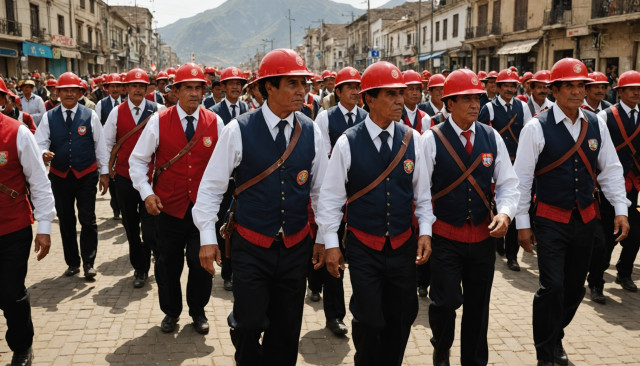
In Peru, May 1st is celebrated not only with a day off, but also with various cultural events. In many cities in the interior, unions and workers' associations organize parades and flag-raising ceremonies. However, the most widespread custom is the fraternal lunch. It's common to see groups of office colleagues or factory coworkers gather at country restaurants to celebrate the achievements of the year.
In the central highlands, for example, Labor Day often coincides with preparations for the Fiesta de las Cruces (Festival of the Crosses), which fills the streets with music and color. In the jungle, families take the opportunity to visit rivers and streams, enjoying a picnic with traditional dishes. This day serves to strengthen social bonds and recognize that work, in addition to being a means of subsistence, is an element of cultural identity in every corner of Peru.
Domestic tourism ideas for the May long weekend
Thanks to May 1st, 2026 falling on a Friday, thousands of Peruvians are planning short trips to escape their routines. Destinations near major cities are the most popular. For those in the capital, there are various weekend getaways from Lima that allow them to enjoy nature without spending too much time traveling.
Among the most popular options for this long weekend are:
- Lunahuaná: Ideal for lovers of adventure, canoeing and good pisco.
- Paracas: A classic destination to enjoy the sea, the Ballestas Islands and the National Reserve.
- Canta and Obrajillo: Perfect for breathing fresh mountain air and enjoying a good fried trout.
- Antioquia: The painted town that offers a unique visual experience and a delightful temperate climate.
For those who decide to travel north, the beaches of Piura and Tumbes continue to offer eternal sunshine, while in the south, Arequipa and Cusco welcome tourists with festivities that mix work with religion, such as the beginning of the mystical pilgrimages in May.
The impact of Labor Day on education and schools
In the educational sphere, Labor Day is an invaluable opportunity to teach students about the value of hard work and the importance of human rights. In Peruvian schools, during the week leading up to May 1st, performances, murals, and exhibitions are often held where children portray different trades and professions. The goal is for them to understand from a young age that all work, from the simplest to the most complex, deserves respect and legal protection.
Teachers use this date to explain the evolution of labor laws in Peru, mentioning historical figures who defended workers. It is also common to invite parents to share their work experiences with students, fostering a culture of admiration for Peruvian workers. These school activities reinforce national identity and prepare future generations to be citizens aware of their duties and rights in the labor market.
Food and family gatherings for May 1st
No celebration in Peru is complete without a meal. May 1st is traditionally a day of large family feasts. Since it's a day off for most people, dishes requiring time and dedication are prepared. Pachamanca, Arroz con Pollo (chicken and rice), Seco de Cabrito (goat stew), and the ever-present Cebiche (ceviche) are the stars of these gatherings. In urban areas, chicken restaurants are usually packed, as Pollo a la Brasa (rotisserie chicken) is the quintessential dish for treating the household workers.
Beyond the flavor, these gatherings have a strong emotional component. It's a time when parents share anecdotes from their first jobs with their children, passing on values of perseverance. In many companies, it's also customary to give out food baskets or special vouchers, helping to ensure that the Peruvian worker's table is well-stocked on their day. Food here serves as a language of gratitude toward those who support the family with their daily work.
Reflection on the future of employment and labor rights in the country
Labor Day in 2026 invites us to reflect on the new challenges facing Peruvian workers. Automation, remote work, and the platform economy have changed our understanding of employment. While the eight-hour workday remains the foundation, there is now much discussion about mental health, work-life balance, and the need for ongoing training in technological skills.
The State and businesses face the challenge of ensuring that these new work models do not represent a setback in the rights won over a century ago. Formalizing employment remains an unfinished task in Peru, and May 1st is the ideal date to renew the commitment to building a country where work is always synonymous with progress, security, and dignity for all citizens. Celebrating this day is, in essence, celebrating life and the hope for a better Peru built by the hands of its people.