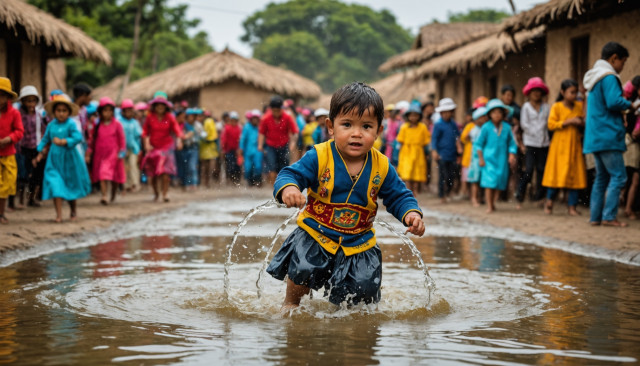
The importance of celebrating childhood in Peru
Peruvian Children's Day is one of the most significant dates on our national civic calendar. Unlike other international celebrations, this day is deeply rooted in the identity and needs of children in our country. Every second Sunday of April, families, schools, and public institutions come together to recognize children as subjects of rights and as the driving force behind our nation's future. In 2026, the celebration takes on special significance as it focuses on holistic well-being and the preservation of our cultural traditions.
This commemoration should not be confused with Children's Day, which is commercially celebrated in August. Peruvian Children's Day is an official date established by law, giving it a formal and educational character. It is an opportune moment to reflect on the progress made in child protection and the challenges that still persist in various regions, from urban coastal areas to the most remote communities in the highlands and rainforest. To learn more about the context of this month, you can explore what is celebrated in April in Peru and how these dates are integrated into our culture.
Historical origin and legal framework of the celebration
The establishment of this date was not accidental, but rather the result of a legislative effort to prioritize children on the public agenda. In 2002, the Congress of the Republic of Peru enacted Law No. 27666, which formally establishes that the second Sunday of April each year be celebrated as Peruvian Children's Day. This law was an important milestone, as it sought to differentiate our celebration from global holidays in order to address the specific realities of children within the national territory.
The main objective of the law is to promote the defense of children's rights and raise awareness in society about the importance of providing them with a safe, healthy environment full of opportunities. Through this legislation, local and regional governments are urged to organize events that encourage children's participation and healthy recreation. It is one of the important Peruvian holidays of the year , marking the beginning of various health and education campaigns nationwide.
Differences between Peruvian Children's Day and Universal Children's Day
It's common to find confusion among the various dates dedicated to children. While Universal Children's Day is celebrated on November 20th, as recommended by the United Nations (commemorating the 1959 Declaration of the Rights of the Child), Peru decided to have its own date in April. The main reason is to allow educational institutions, which are already in the middle of the school year in April, to develop in-depth educational activities about children's rights and responsibilities.
Fundamental rights of children in the Peruvian context
Celebrating Peruvian Children's Day means, above all, remembering the rights that the State and society must guarantee. In Peru, these rights are protected by the Code for Children and Adolescents, which aligns with international treaties. Among the fundamental pillars are the right to life, personal integrity, and identity. The latter is crucial, since access to a National Identity Document (DNI) from birth allows children to access basic services such as health and education.
The right to education is another central focus. In our country, we strive for education to be inclusive and respectful of the cultural and linguistic diversity of each region. Likewise, the right to health guarantees that all Peruvian children have access to the Comprehensive Health Insurance (SIS) and nutrition programs to combat problems such as childhood anemia, a challenge the country is facing with determination. Protection against child labor and all forms of violence is also a priority highlighted during the celebrations on this second Sunday of April.
School activities and educational projects
Educational institutions play a leading role in this celebration. During the week leading up to the second Sunday of April, schools typically organize reflection days, poetry contests, and artistic performances. Teachers take advantage of this time to teach students about their rights in a fun and engaging way. It's common to see the creation of colorful murals where children express their dreams and what they value most about their country.
For teachers looking to innovate in the classroom, there are various school projects about Peruvian culture that can be perfectly adapted to this time of year. From creating stories based on regional legends to organizing talent shows that celebrate traditional dances, the possibilities are endless. The goal is for children to feel valued and understand that their voice is important for the development of their community.
Suggestions for murals and school performances
An excellent idea for a school mural is the theme of children's rights linked to Peruvian geography. For example, representing the right to a healthy environment with images of our Amazon rainforest or the right to education with children from the Andes attending classes. As for performances, role-playing scenarios where children resolve conflicts peacefully or recite poems by Peruvian authors such as César Vallejo or Mariano Melgar offer significant educational value.
Best destinations to visit with children in Peru
If you're planning a family outing for Sunday, April 12, 2026, Peru offers wonderful destinations that combine learning and fun. In Lima, the Parque de las Leyendas (Park of Legends) remains a favorite, allowing children to discover the wildlife of the three natural regions: coast, highlands, and rainforest. The Circuito Mágico del Agua (Magic Water Circuit) is another spectacular option to enjoy a light and fountain show that delights both adults and children.
For those staying in the provinces or planning a short trip, Peru offers many wonderful destinations that are perfect for children. In Ica, the Huacachina dunes provide an unforgettable adventure, while in Cusco, the Sacred Valley offers a direct connection with history and nature in a more temperate climate than the imperial city. In the jungle, destinations like Tarapoto and Iquitos feature butterfly gardens and animal rescue centers that raise children's awareness of the importance of environmental conservation.
Interactive museums and cultural spaces
Not everything happens outdoors; culture can also be experienced in indoor spaces designed for children. The National Museum and the Natural History Museum in Lima have rooms dedicated to young children. Likewise, the Lima Art Museum (MALI) often offers painting and crafts workshops during the weekend of Peruvian Children's Day. These spaces allow children to engage with art and history in a fun and unconventional way.
Rescuing traditional Peruvian games
In the digital age, Peruvian Children's Day is the perfect opportunity to disconnect children from screens and reconnect them with the games their parents and grandparents enjoyed. These games not only encourage physical activity but also strengthen social bonds and a sense of community. Reviving these traditions is a way to preserve our cultural identity.
Among the most popular games that can be played in parks or yards are spinning tops, marbles, and hopscotch. The game of "dodgeball" is a classic Peruvian playground game that requires agility and teamwork. There's also hopscotch, which helps children improve their balance and coordination. Organizing an afternoon of traditional games in the neighborhood or at the club is one of the most economical and rewarding activities you can do at this time of year.
How to play with a spinning top and marbles
The spinning top requires a string and a lot of practice to make it spin in the palm of your hand. It's an art that has been passed down through generations. Marbles, on the other hand, have various variations, such as the "triangle" or the "hole," where precision is key. Teaching these rules to today's children is giving them a piece of Peru's living history.
Peruvian cuisine for the little ones
No celebration in Peru is complete without our delicious food. For Peruvian Children's Day, you can prepare dishes that are both nutritious and appealing to children's palates. Red noodles with chicken or the classic salchipapa (consumed in moderation) are always a hit. However, it's also a great opportunity to introduce ancestral ingredients in a creative way.
A causa limeña in fun shapes, mini quinoa burgers, or a purple corn pudding with pieces of fruit are excellent options. The goal is for children to learn to appreciate the richness of our natural products, such as potatoes, corn, and Amazonian fruits. Preparing food as a family can also be an educational activity, where children help with simple tasks and learn about the origin of each ingredient.
Society's commitment to the future of the country
Beyond gifts and celebrations, Peruvian Children's Day should be a day of genuine commitment. Every citizen has a role to play in protecting children. This includes everything from respecting play areas in parks to reporting any situation that puts a child at risk. Businesses are also contributing with corporate social responsibility programs, and the government is strengthening its protection policies.
In 2026, the focus must be on closing the digital and educational gaps that still affect many children in rural areas. Technology should be a tool for inclusion, not isolation. By celebrating our children, we are celebrating the hope for a more just, educated Peru, proud of its roots. May this second Sunday of April be an opportunity to embrace childhood and ensure them a dignified present so they can build a bright future.