The meaning of August in the Peruvian calendar
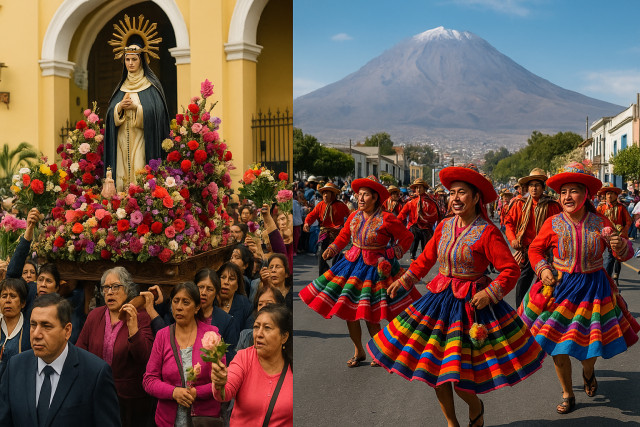
August is a month of profound historical, religious, and cultural significance in Peru. Traditionally known as the month of the winds, it marks an important transition in the Andean and civil calendar. For Peruvians, this period represents an opportunity to pay homage to emblematic figures of the faith, commemorate the liberating feats that defined our independence, and celebrate regional identity in various cities throughout the country.
From the Andean peaks to the Pacific coast, August is lived with a unique intensity. It is the month when the earth receives offerings in the ritual of Pago a la Tierra (Payment to the Earth), when the streets of the White City are adorned for its anniversary, and when devotion to Saint Rose of Lima mobilizes millions of the faithful. Furthermore, the school calendar is enlivened with dates dedicated to folklore and to honoring grandparents, pillars of the Peruvian family.
Exploring the historical events of August offers a deeper understanding of our national identity. It's a time for domestic tourism, taking advantage of the dry mountain climate and the patron saint festivals that attract both national and international visitors. In the following sections, we'll detail each relevant date so you can plan your activities, school assignments, or seasonal trips.
National holidays and non-working days in August
In Peru, August features two major national holidays that impact both the public and private sectors nationwide. These days are essential for rest, historical reflection, and the promotion of tourism.
August 6: Commemoration of the Battle of Junín
For the past few years, August 6th has been declared a national holiday to commemorate the Battle of Junín, one of the most decisive battles in the fight for the independence of Peru and South America. Taking place in 1824 on the plains of Junín, this battle was a display of bravery in which the patriot cavalry, led by figures such as Simón Bolívar and the Hussars of Peru, achieved a crucial victory over the royalist forces.
Celebrating this date is not just a formal ceremony, but a way to remember the sacrifice of those who forged our freedom. Educational institutions often hold performances and create murals that highlight the importance of this event in the emancipation process. For travelers, it's an excellent opportunity to visit the Chacamarca Historical Sanctuary in Junín, where an imposing monument stands in honor of the victors.
August 30: Feast of Saint Rose of Lima
August 30th is perhaps the most important religious date of the month. It commemorates Isabel Flores de Oliva, known worldwide as Saint Rose of Lima, the first saint of the Americas and patron saint of police and nursing institutions in Peru. Her veneration transcends borders, but it is in Lima where it is celebrated with the greatest fervor.
Thousands of people flock to the Sanctuary of Saint Rose, located in the historic center of the capital, to leave their letters in the famous Wishing Well. It's a tradition that unites entire families seeking miracles or giving thanks for favors granted. If you'd like to learn more about this celebration, you can consult our article on the history and customs of the Saint Rose of Lima festival to delve deeper into her legacy.
Main regional and religious festivals
Beyond national holidays, August is a month of anniversaries and patron saint festivals that mobilize entire regional economies. These celebrations reflect the cultural diversity that characterizes us.
The month of Pachamama: Offerings to Mother Earth
In the Andean world, August is considered the month of Pachamama, or Mother Earth. According to the Inca and pre-Inca worldview, during this time the earth is "thirsty" and "open," making it the ideal moment to perform rituals of gratitude and petitions for bountiful harvests. August 1st marks the official beginning of these ceremonies, known as the Payment to the Earth.
In regions like Cusco, Puno, Apurímac, and Huancavelica, Andean priests, or "paqos," lead offerings that include coca leaves, chicha de jora (a fermented corn beverage), seeds, and other sacred elements. It is one of Peru's most important annual celebrations , connecting modern man with his ancestral roots and fostering respect for the environment.
Arequipa Anniversary: The White City is celebrating
On August 15, Arequipa celebrates its anniversary of its Spanish founding (1540). Throughout the month, the city is filled with cultural activities, food fairs, and dance competitions. The highlight is the Corso de la Amistad (Friendship Parade), a massive procession that travels along the main avenues with floats and dance troupes showcasing the best of Arequipa's folklore.
Gastronomy plays a vital role during this time. Visiting the picanterías (traditional restaurants) is practically obligatory to enjoy a rocoto relleno (stuffed rocoto pepper), adobo arequipeño (Arequipa-style marinated pork), or chupe de camarones (shrimp chowder). In August, the White City (Arequipa) positions itself as one of the country's most important tourist destinations, attracting thousands of visitors seeking to experience the joy of its people and the beauty of its sillar (volcanic stone) architecture.
Day of the Reincorporation of Tacna into Peru
August 28th is a date of profound patriotism in southern Peru. It commemorates the return of the province of Tacna to the Peruvian homeland in 1929, after nearly 50 years of Chilean occupation following the War of the Pacific. The "Heroic City" is adorned in red and white for the famous Procession of the Flag, a solemn ceremony where the women of Tacna carry the national flag through the streets in respectful silence, which then erupts in cheers and patriotic songs.
Detailed calendar of important dates in August
To facilitate the planning of school and cultural activities, we present a table with the most important dates of the month in Peruvian territory:
| Day | Celebration or Anniversary | Scope |
|---|---|---|
| August 1 | Pachamama Day (Payment to the Earth) | Regional / Andean |
| August 4 | Judge's Day in Peru | Institutional |
| August 6 | Battle of Junín | National Holiday |
| August 15 | Anniversary of Arequipa / Virgin of the Assumption | Regional |
| August 22 | World Folklore Day | Educational / Cultural |
| August 26 | Senior Citizens' Day (Grandparents' Day) | Social / Family |
| August 27 | Environment Defense Day | Ecological |
| August 28 | Reincorporation of Tacna into Peru | Regional / Civic |
| August 30 | Saint Rose of Lima | National Holiday |
| August 31 | Liberator Marshal Ramón Castilla Day | Civic |
Anniversaries and civic dates for the education sector
In Peruvian schools, August is a key month for strengthening national identity and social values. Teachers often plan activities that go beyond theory, seeking the active participation of students.
World Folklore Day: Identity and Tradition
August 22nd is World Folklore Day, a date that takes on special significance in Peru due to our immense variety of dances, music, and customs. In schools, it's common to organize festivals where students perform dances like the marinera, the huaylas, or the scissor dance. This day is ideal for exploring resources about traditional Peruvian dances and their cultural meaning.
Senior Citizens' Day: A Tribute to Wisdom
August 26th is Grandparents' Day, a day to honor grandparents and senior citizens. In schools, activities are promoted to foster integration, where children spend time with their grandparents, listening to their stories and recognizing their fundamental role in transmitting values and traditions. It's an opportunity to promote empathy and intergenerational respect.
Tourism in August: Best destinations to travel to in Peru
August is considered by many travel experts to be one of the best months to travel around Peru, especially the Andean region and the jungle, due to the favorable weather conditions.
Cusco and the Sacred Valley
Although Inti Raymi has passed, August offers clear days and starry nights in Cusco. It's the perfect time for hikes like the Inca Trail or visiting Machu Picchu without worrying about rain. Furthermore, witnessing Pachamama rituals in local communities adds immeasurable cultural value to the travel experience.
The Central Jungle and bird watching
For those who prefer warmer weather, the central jungle (Chanchamayo, Oxapampa) offers excellent weather in August. It's the ideal season for visiting waterfalls and enjoying adventure tourism. Additionally, in the northern jungle, patron saint festivals continue to fill the Amazonian towns with color and flavor.
Tarapoto and nature tourism
August offers the perfect opportunity to enjoy the Blue Lagoon and Ahuashiyacu waterfalls with controlled water flow and clear blue skies. It's an ideal family destination that combines relaxation with top-notch Amazonian cuisine. If you're planning a trip, remember to check the safety and health recommendations to ensure a pleasant stay.
Recommendations for making the most of August
To make the most of this activity-filled month, we suggest you follow these practical tips:
- Plan ahead: With two national holidays, flights and hotels tend to sell out quickly. Book at least three weeks in advance.
- Prepare for the weather: If you're traveling to the mountains, remember that August is a month of strong solar radiation during the day but frost at night. Pack thermal clothing and sunscreen.
- Participate in the traditions: Whether it's leaving a letter to Santa Rosa or participating in a Pago a la Tierra (Offering to the Earth), experiencing local traditions will allow you to connect more deeply with Peruvian culture.
- Support local: August is a month full of craft fairs. It's the perfect opportunity to buy products directly from Peruvian producers and artisans.
August in Peru is much more than a date on the calendar; it's a celebration of our historical resilience, our unwavering faith, and our rich cultural heritage. Whether you're in the city, the countryside, or the classroom, every day this month offers a lesson in Peruvian identity worth knowing and sharing.