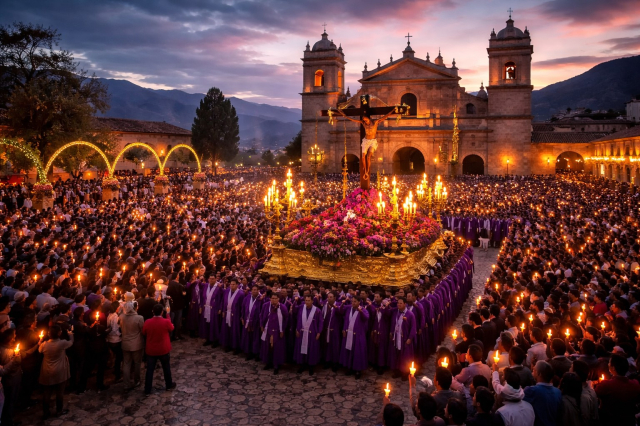
Holy Week in Peru is one of the most important and anticipated religious celebrations of the year. Each region of the country observes it with devotion, culture, and customs that blend Catholic heritage with Andean traditions. From the solemn processions in Ayacucho to the living reenactments in northern towns, this time of year becomes an opportunity to travel, explore, and enjoy the country.
In 2026, Holy Week will be celebrated between March 29 and April 5 , dates that many Peruvians take advantage of to relax or engage in religious tourism. In this article, we'll tell you what to do, where to travel, and how to experience this holiday in true Peruvian style.
Top destinations to experience Holy Week in Peru
Holy Week in Ayacucho: tradition and devotion in every street
If there is one emblematic place for this celebration, it is Ayacucho , known as the "religious capital of Peru." Its colonial streets are filled with processions, masses, sacred music, and a unique atmosphere that attracts thousands of worshippers and tourists.
What you can't miss:
The procession of the Lord of Agony on Holy Thursday.
The reenactment of the Stations of the Cross on Acuchimay Hill.
Holy Saturday , with the symbolic burning of castles and fireworks.
In addition, Ayacucho offers delicious typical cuisine for the occasion, such as dried fish , Friday chili , and traditional stews .
You can also read about other religious festivals in Peru on our blog: Traditional Festivals of Peru .
Holy Week in Cusco: Spirituality in the Andes
In Cusco , Holy Week is celebrated with a blend of religious fervor and cultural identity. The image of the Lord of the Earthquakes , patron saint of Cusco, is carried through the Plaza de Armas in one of the most solemn processions in the country.
Recommended activities:
Attend the Mass of the Lord of the Earthquakes on Holy Monday.
Visit historic temples such as the Cusco Cathedral and the Church of the Society of Jesus .
Enjoy typical gastronomy such as chiriuchu , a traditional dish of Holy Week in Cusco.
This experience combines spirituality, history and tourism, ideal for those who want a deep connection with Andean culture.
Holy Week in Lima: faith and urban traditions
The capital also has celebrations full of symbolism. In Lima's Historic Center , processions depart from colonial churches like San Francisco and Santo Domingo , recalling the times of the viceroyalty.
What to do in Lima during Holy Week:
Visit the Convent of San Francisco and its famous catacombs.
Participate in the procession of Christ of the Forsaken .
Enjoy cultural tours of the historic Barranco or Pachacamac .
In addition, many Lima residents take advantage of the holidays to travel to nearby destinations such as Lunahuaná , Canta or Churín , ideal for short getaways.
Holy Week in Piura and Trujillo: Customs of Northern Peru
In the north, Holy Week combines religious devotion with coastal warmth. In Catacaos (Piura) and Trujillo , processions are held accompanied by music and flowers.
What to visit:
In Catacaos, the procession of the Lord of Triumph , with tapestries of flowers and sawdust.
In Trujillo, the Holy Sepulchre procession and the Moche craft fair.
Northern Peru also offers beaches, seafood, and family relaxation, perfect for those seeking to combine faith and tourism.
Unique experiences during Holy Week
Religious and cultural tourism
Holy Week is not only a manifestation of faith, but also an opportunity to discover the rich culture of Peru. Many towns offer reenactments of the Stations of the Cross , food fairs , and religious crafts .
Recommendations:
Participate in living altarpieces in Ayacucho villages.
Attend fairs featuring typical products, such as those in Cajamarca or Huancavelica.
Try traditional meatless dishes, such as fish stew , purple corn pudding , or Lenten empanadas .
Discover more in our article about Peruvian gastronomy by region .
Holiday getaways and domestic tourism
If you're looking for relaxation rather than processions, the Easter holidays are ideal for traveling within the country. Domestic tourism grows every year during this time.
Recommended destinations:
Lunahuaná: for canoeing and tasting wine and shrimp.
Paracas: to see marine wildlife and relax by the sea.
Huaraz: for those who prefer adventure and nature.
You can plan your trips by checking our calendar of long weekends in Peru .
Easter Gastronomic Traditions
During these days, eating red meat is avoided, so dishes with fish, legumes, and desserts take center stage.
Typical Easter dishes:
| Region | Traditional dish | Main ingredients |
|---|---|---|
| Coast | Fish ceviche | Fresh fish, lemon, chili pepper |
| Saw | Friday's drink | Broad beans, chickpeas, potato, milk |
| Jungle | Fish Juane | Rice, egg, bijao leaves |
In addition, it is common to prepare purple corn pudding , rice pudding , and sweet empanadas , which are part of the "flavor" of Peruvian Holy Week.
Tips for enjoying Holy Week in Peru
Book in advance: Hotels and transport tend to fill up, especially in Ayacucho and Cusco.
Respect local traditions: Avoid inappropriate behavior during processions or masses.
Wear appropriate clothing: In Andean regions, the nights are cold.
Support local tourism: Buy handcrafted products and taste typical dishes prepared by local communities.
Plan your days off in advance: Check which days are official holidays and organize your activities with the family.
Holy Week and sustainable tourism
More and more Peruvian travelers are choosing sustainable experiences during this holiday. You can participate in community-based tourism , visit rural villages , or join religious or ecological volunteer programs .
In regions like Apurímac , Amazonas or Junín , local communities offer rural accommodations where you can share their customs and contribute to local development.
Learn more about this approach in our article: Sustainable Tourism in Peru .
Easter with family: an opportunity to reconnect
Beyond its religious significance, Holy Week in Peru is a time for families to come together, rest, and reflect . Many take the opportunity to reconnect with nature or their cultural roots.
Whether participating in a procession, trying a typical dish, or traveling to a new destination, Holy Week is an experience that reflects the diversity and spirituality of the Peruvian people.