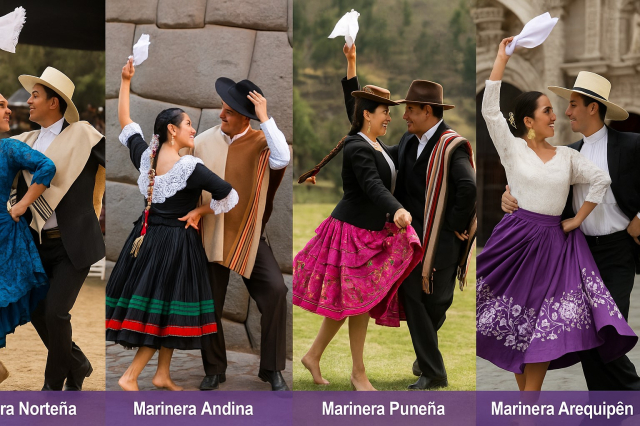
The Peruvian Marinera is much more than a dance: it is a living expression of the soul of Peru. It was born from the blending of indigenous, African, and Spanish cultures, and today it is danced with pride from the coast to the highlands and the jungle.
Each region of the country has adapted this dance with its own rhythms, costumes, and courtship rituals. This is why there are several types of Marinera , each with unique characteristics that reflect Peru's cultural diversity.
👉 You can learn more about the historical context of this dance in our article about the Marinera Festival in Trujillo , where the most important competition in the country is held.
The main types of Marinera in Peru
1. Marinera Limeña: the most elegant and traditional version
The Marinera Limeña is considered the oldest form of this dance. It originated in Lima during the 19th century, when the city was the social and political center of the country.
Main features:
Rhythm: slow, romantic and stately.
Clothing: the man wears a suit and hat; the woman wears a wide skirt and elegant blouse.
Style: the dance highlights coquetry and subtlety, with small steps and refined gestures.
Music: performed by guitars and cajóns, with loving and melodic lyrics.
👉 This version is very common in cultural presentations and school events because of its classic and sophisticated feel.
2. Marinera Norteña: strength, mischief and passion from Trujillo
The Marinera Norteña , originating in Trujillo , is the most recognized nationally and internationally. Its energy, elegance, and joyful rhythm have made it a favorite in competitions and festivals.
Main features:
Rhythm: faster and more marked than the Lima rhythm.
Outfit:
Man: white shirt, dark pants, poncho and straw hat.
Woman: flowing skirt, embroidered blouse, updo with flowers.
Style: intense flirtation, strong footwork, wide turns and coquetry with a handkerchief.
Music: bands with clarinets, trumpets and drums.
It is danced barefoot, which highlights the dancer's naturalness and stage presence. In January, Trujillo celebrates the National Marinera Competition , an event that attracts thousands of spectators and couples from all over the country.
👉 More details about this festival in Fiesta de la Marinera: history, dates and competitions in Trujillo .
3. Marinera Serrana or Cusqueña: Andean elegance and deep feeling
The Marinera Serrana has a more sober and sentimental character. It originated in the Andes, especially in regions like Cusco, Ayacucho, and Huancayo , where it merged with local dances and huayno music.
Main features:
Rhythm: slower and more melancholic.
Clothing: Andean textiles, wide-brimmed hats, pleated skirts, and colorful blankets.
Style: shorter steps, serene gaze, and respectful courtship.
Music: accompanied by guitars, violins and harps.
This type of Marinera highlights Andean romanticism and the spiritual union of the couple more than flirtation.
4. Marinera Puneña: a highland tradition with symbolic power
The Marinera Puneña is an Andean adaptation that combines the elegance of the coastal dance with the strength of the Aymara dances.
Main features:
Rhythm: firmer and with marked steps.
Clothing: colorful ponchos, multi-layered skirts and typical hats of the highlands.
Music: accompanied by panpipes and bass drums.
This version is danced especially during the patron saint festivities of Puno and Juliaca, as part of the cultural celebrations of the highlands.
5. Marinera Arequipeña: Arequipa pride and colonial charm
Less well known but equally representative, the Marinera Arequipeña combines the grace of Lima with the intensity of southern Peru.
Main features:
Rhythm: intermediate between the Lima and the northern styles.
Clothing: the man wears a white hat and vest; the woman wears a skirt with Arequipa embroidery.
Music: influenced by the yaraví and local guitar music.
It is common to see her at festivities such as Arequipa Week or in regional competitions that revalue her identity.
Differences between the types of Marinera
| Marinera style | Main region | Rhythm | Dance style | Featured attire |
|---|---|---|---|---|
| Limeña | Lime | Slow and elegant | Subtle, romantic | Blouse and long skirt |
| Northern | Trujillo | Cheerful and fast | Flirtatious and vigorous | Wide skirts and barefoot |
| Serrana | Andes | Slow and deliberate | Respectful and melodic | Andean textiles |
| Puneña | Fist | Marked and firm | Traditional and symbolic | Ponchos and skirts |
| Arequipa | Arequipa | Intermediate | Graceful and stylish | Embroidered skirt |
The Marinera as an expression of national identity
Each type of Marinera is not only a dance style, but a regional symbol . Together, they represent the unity of Peru in its diversity: the elegance of Lima, the strength of the north, the passion of the Andes, and the joy of the south.
That's why more and more schools and festivals across the country are promoting this dance as a way to keep our cultural heritage alive.
👉 Discover other emblematic dances of the country in The most representative dances of each region of Peru .