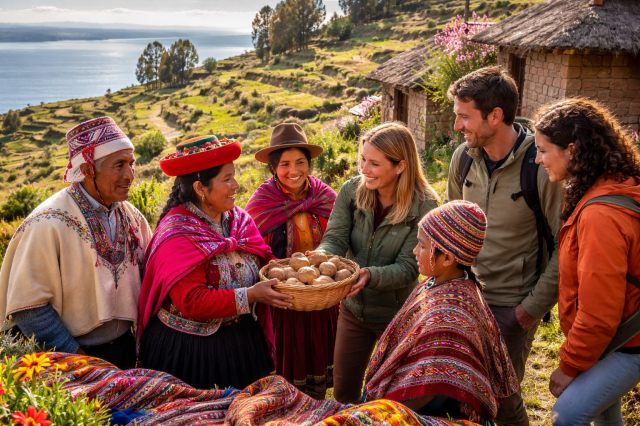
Sustainable tourism is a form of travel that seeks to generate a positive impact on the environment, the local economy, and the communities that host visitors. In Peru, this approach has gained momentum in recent years, driven by travelers' interest in authentic and responsible experiences.
Beyond visiting the most well-known destinations, such as Machu Picchu or Cusco, sustainable tourism invites you to get to know the country from its roots , live with Andean and Amazonian communities, and participate in activities that respect nature and strengthen cultural identity.
Communities that promote sustainable tourism in Peru
1. Amantaní Community (Puno)
Located on the majestic Lake Titicaca , Amantaní Island is a prime example of successful community-based tourism. Local families provide lodging and meals to visitors, who participate in agricultural work, textile workshops, and traditional festivities.
Furthermore, the profits are distributed among the community members, allowing for improvements in education and infrastructure without harming the lake's ecosystem.
2. Willoq Community (Cusco)
In the Sacred Valley of the Incas, the community of Willoq stands out for its work in preserving Andean textile heritage . Visitors can participate in the natural dyeing process, learn about the Quechua worldview, and contribute to the maintenance of their traditions.
Willoq belongs to the Community Rural Tourism Network of Peru, an initiative of the Ministry of Foreign Trade and Tourism (MINCETUR) that seeks to strengthen authentic experiences throughout the country.
3. Community of Llachón (Puno)
On the Capachica Peninsula, Llachón combines hospitality, vibrant culture, and breathtaking scenery. Travelers stay in family homes and share in the daily life of the locals: fishing, cooking with local ingredients, and enjoying walks along the lake shore.
It is an ideal destination for those seeking human contact and sustainable rest .
4. Chichubamba Community (Urubamba, Cusco)
Just a few minutes from Ollantaytambo, Chichubamba is a model of rural tourism entrepreneurship . The community members offer workshops in pottery, beekeeping, and artisanal chocolate production.
Visiting Chichubamba not only supports the local economy, but also provides an educational experience about self-sufficiency and the value of community work.
5. Amazonian communities of Madre de Dios
In the heart of the Peruvian Amazon, communities like Infierno and Baltimore are promoting ecotourism and rainforest conservation . They have developed eco-lodges powered by solar energy, encouraging wildlife observation without disturbing the animals' natural habitat.
Travelers can learn about reforestation projects, visit sustainable farms, and discover how Amazonian traditions are integrated into modern life without losing their essence.
How sustainable tourism benefits Peruvian communities
Sustainable tourism not only protects ecosystems but also empowers local communities . Key benefits include:
Direct income generation without intermediaries.
Preservation of languages and cultural traditions.
Environmental education for young people and adults.
Strengthening community organization.
Promoting respect between tourists and hosts.
These experiences allow visitors to connect with the heart of Peru , where ancestral wisdom and nature coexist in balance.
Emerging sustainable tourism destinations
Peru offers an increasing number of places that implement sustainable practices. Some of the most highly recommended are:
| Region | Destination | Main attraction | Sustainable activities |
|---|---|---|---|
| Amazon | Gocta and Cocachimba | Gocta Waterfall | Guided walks, eco-friendly accommodations |
| Cusco | Patacancha | Living Quechua culture | Textile workshops, rural coexistence |
| Piura | Vice Mangroves | Coastal conservation | Bird watching, artisanal fishing |
| San Martín | Tarapoto and Lamas | High jungle and Quechua culture | Organic plantations, community visits |
| Arequipa | Valley of the Volcanoes | Geoparks and rural tourism | Interpretive walks, local gastronomy |
Sustainable tourism and environmental education
Responsible tourism is also an educational tool. Each visit becomes a living lesson on biodiversity and cultural respect .
Many Peruvian schools and universities already promote educational trips to sustainable communities, integrating topics such as recycling, climate change, and local traditions.