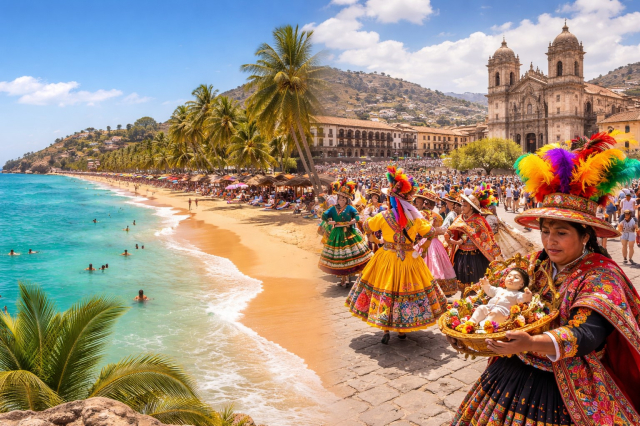
The Peruvian summer is one of the most anticipated seasons of the year. From December to February, the country vibrates with energy, color, and tradition. While the coast celebrates its beaches, gastronomy, and festivals, the highlands and the jungle host religious and cultural celebrations that attract thousands of visitors.
The end of the year and the beginning of the next bring with them a unique mix of celebrations, trips, fairs and popular traditions that reflect the cultural diversity of Peru.
The best beaches in Peru to enjoy the summer
The summer heat beckons us to the sea. The Peruvian coast boasts a wealth of charming beaches to suit all tastes:
Máncora and Vichayito (Piura): perfect for surfing, relaxing in resorts or enjoying their vibrant nightlife.
Zorritos (Tumbes): an ideal destination for those seeking tranquility and good weather throughout the year.
Punta Sal: famous for its white sand and warm waters, one of the most visited destinations by national and foreign tourists.
Asia and Cerro Azul (Lima): ideal for weekend getaways from the capital.
The beaches of Ilo and Mollendo (Arequipa): affordable and family-friendly options in southern Peru.
How Christmas is celebrated on the coast, in the mountains, and in the jungle
Christmas in Peru reflects the cultural richness of its regions:
On the coast , families celebrate with traditional dinners that include turkey, panettone and hot chocolate, accompanied by fireworks and Creole music.
In the highlands , the festival takes on a more spiritual tone: the " Niños Manuelitos " and the dances of adoration are the main attractions in Cusco and Ayacucho.
In the jungle , communities combine masses with popular festivals, regional foods, and folk parades .
January fairs and festivities in Peru
The new year kicks off with a full schedule of local festivals and regional fairs :
Feast of Saint Sebastian (Cusco, January 20): full of color, music and processions in honor of the patron saint.
Mollendo Tourist Week (Arequipa): combines water sports, competitions and gastronomic fairs.
Marinera Festival (Trujillo): one of the most representative events of the summer, where hundreds of couples compete in the national dance.
Cajamarca Carnivals (February): declared Cultural Heritage of the Nation, they stand out for their parades, troupes and ancestral traditions.
Each event reflects the joy and hospitality of the Peruvian people, and is an opportunity to promote domestic tourism.
Carnivals of Peru: color, music and tradition
During February, the country is filled with water, paint, and music. Peruvian carnivals are an unforgettable experience.
Cajamarca: the most famous, with parades, song contests and colorful costumes.
Ayacucho: combines games, dance, and peasant traditions.
Puno: unites carnivals with devotion to the Virgin of Candelaria.
Amazonas and San Martín: celebrate with troupes that mix jungle rhythms and ancestral customs.
Carnivals are a perfect opportunity to experience the joy of the Peruvian people and to live their cultural identity from within.
Summer gastronomy: fresh and regional flavors
The heat of the Peruvian summer inspires a gastronomy full of color and freshness:
Ceviche: emblematic dish and symbol of national cuisine.
Causa limeña: ideal for hot days, with hints of lemon and yellow chili pepper.
Purple corn drink and fruit sodas: must-haves at fairs and beaches.
Homemade ice cream and shaved ice: preferred by children and tourists.
Each region adapts these dishes to its own style: in the north they are served with fresh fish, in the mountains with trout, and in the jungle with tropical ingredients.
Domestic tourism and new travel trends
In recent years, interest in sustainable and community-based tourism has grown, a trend that strengthens during the summer. Travelers are looking for authentic experiences:
Rural and ecological accommodations in the Sacred Valley and the Colca.
Gastronomic routes in Lambayeque and Arequipa.
Jungle tourism with local communities in Iquitos or Tarapoto.
These alternatives promote the cultural and natural conservation of the country, encouraging a more responsible way of traveling.
Tips for enjoying the Peruvian summer
Plan your trips in advance, especially in January and February.
Book sustainable or environmentally certified accommodations.
Participate in local fairs and festivals to support regional economies.
Stay hydrated and protect your skin from the sun, especially on the north coast.
Respect local traditions and the environment.