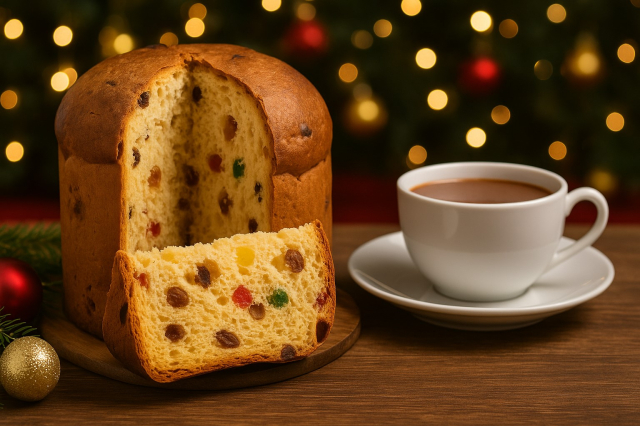
In Peru, there's no Christmas without panettone. This fluffy sweet bread with candied fruit and raisins has become a symbol of family unity, tradition, and joy. Every December, millions of Peruvian households share a cup of hot chocolate with a slice of panettone, a custom that transcends social classes and regions.
Peruvian Panettone Day is celebrated every December 19th , a date created to pay homage to this product that is part of the national gastronomic identity. This celebration seeks to highlight its origin, evolution, and the role it plays in the country's Christmas culture.
Origin of panettone and its arrival in Peru
Panettone has Italian roots. Its origins date back to the 15th century in the city of Milan , where a sweet bread called panettone was made for Christmas celebrations. The recipe was brought to Peru at the beginning of the 20th century by Italian immigrants who settled mainly in Lima and Callao.
However, it wasn't until the mid-20th century that panettone began to gain popularity among Peruvians, thanks to industrialization and local production by major brands like D'Onofrio, Todinno, and Winter's. Over time, local bakers adapted the recipe to local tastes, creating a unique version: fluffier, sweeter, and with more colorful fruits.
The birth of Peruvian Panettone Day
The Ministry of Production of Peru officially established Peruvian Panettone Day on December 19th , to recognize the economic, cultural and social importance of this product during the Christmas season.
During this period, it is estimated that Peruvians consume more than 30 million panettone cakes , making Peru one of the countries with the highest per capita consumption in the world.
The celebration also seeks to boost the national industry and highlight the work of thousands of bakers and micro-enterprises that produce artisanal panettone throughout the country.
Interesting facts about Peruvian panettone that you may not know
Peru is the second country with the highest consumption of panettone in the world , only after Italy.
Panettone is eaten year-round , not just at Christmas. In many shops and markets, it's even sold in July, during the Independence Day celebrations.
In regions like Puno or Cusco, some families accompany it with cheese and hot mate , instead of the classic chocolate.
In Peruvian schools and offices, it is a tradition to organize "chocolatadas," where panettone is the undisputed star.
In recent years, gourmet and regional versions have emerged, such as panettone made with quinoa, Amazonian cacao, or aguaymanto (goldenberry).
Panettone as an engine of Peruvian industry
Panettone is not only a cultural symbol, but also an economic engine. The production of this sweet bread involves bakeries, food industries, farmers, transporters, and merchants throughout the country.
According to industry data, the panettone industry generates thousands of temporary jobs in December and moves millions of soles in national and international sales.
Each year, manufacturers compete with innovations: from mini presentations to new flavors with chocolate chips or creamy fillings. This competition has positioned Peruvian panettone as an export product, especially to countries with Peruvian communities such as Chile, the United States, and Spain.
Artisanal Peruvian panettone: a tradition that endures
Although major brands dominate the market, artisanal panettone remains highly valued. In neighborhood bakeries and local fairs, Peruvians seek out that "homemade" flavor reminiscent of Christmases of yesteryear.
These panettone cakes are usually made with natural ingredients , without preservatives, and maintain traditional slow fermentation techniques, giving them a unique texture and aroma.
In cities like Arequipa, Trujillo, Cusco, or Ayacucho, artisanal panettone competitions have become popular, promoting creativity and the preservation of family recipes.
Panettone and its significance on the Peruvian Christmas table
Panettone is more than just food; it's a symbol of togetherness, affection, and generosity . During Christmas, families share this sweet bread as a sign of unity. In rural communities and urban areas, hot chocolate events organized by neighbors or institutions aim to bring joy to children and strengthen the spirit of solidarity.
The image of panettone, hot chocolate, and Christmas music is part of the collective imagination of modern Peru, blending European tradition and Andean warmth.
Recommendations for enjoying a good Peruvian panettone
Check the label: make sure it contains natural ingredients and no excess colorings.
Accompany it with thick Peruvian chocolate , made with national cocoa.
Try the regional versions , especially those that use Andean or Amazonian products.
Store the panettone in a cool, sealed place to maintain its fluffy texture.
The future of Peruvian panettone
Peruvian panettone continues to evolve. Each year, new regional producers innovate with local ingredients and healthier presentations, seeking to keep the tradition alive without losing its essence.
December 19th, Peruvian Panettone Day, is an opportunity to recognize this shared heritage and celebrate the creativity that characterizes our gastronomy.