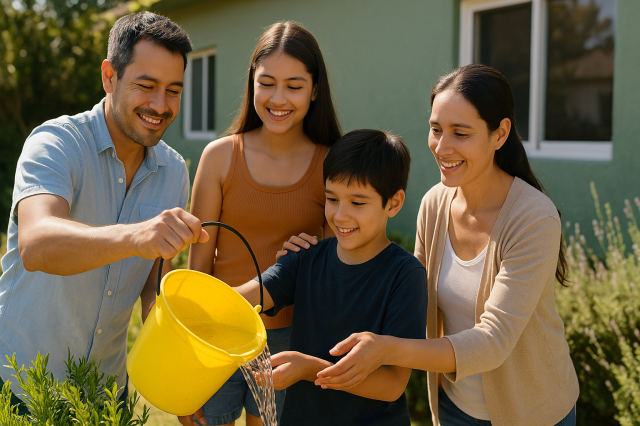
During the summer months, water consumption in Peruvian homes skyrockets. Showers are more frequent, gardens require watering, and high temperatures cause consumption to increase without us even realizing it. In cities like Lima, Piura, and Trujillo , where water reserves are limited, this can exacerbate the scarcity.
Water is a valuable resource, and although Peru has abundant natural sources, its distribution is not equitable : the coast is home to the majority of the population but has access to only 2% of the country's freshwater. Therefore, saving water starts at home, especially during the summer.
Practical tips for saving water at home
1. Turn off the tap when you're not using it.
When you brush your teeth, shave, or wash the dishes, turn off the tap . A running tap can waste more than 10 liters per minute .
2. Repair leaks and drips
A constant drip can waste more than 20 liters a day . Check your faucets, showers, and toilets regularly. If you hear the sound of running water when it's not in use, there's a leak.
3. Use buckets instead of a hose
When washing your car or watering the garden, use buckets . An open hose can use up to 500 liters per wash .
4. Reuse water whenever possible
The water you use to wash fruits or vegetables can be used to water your plants. You can also collect the water from the shower while you wait for it to heat up.
5. Install water-saving accessories
Install aerators or low-flow showerheads . These devices reduce water consumption by up to 40% without affecting water pressure.
Taking care of the garden without wasting water
6. Water early in the morning or at dusk
Avoid watering during the hottest part of the day, as the heat evaporates much of the water. Water before 8 am or after 6 pm.
7. Choose native plants from Peru
Choose species such as molle, cactus, aloe vera or bougainvillea , which are drought-resistant and require less water.
8. Use drip irrigation
If you have a garden or vegetable patch, drip irrigation is the most efficient option. It delivers water directly to the roots and reduces evaporation.
Good practices in the kitchen and bathroom
9. Fill the washing machine completely.
Using the washing machine or dishwasher half empty is wasteful. Wait until you have a full load before turning them on.
10. Shorten your showers
Reducing shower time by just three minutes can save over 30 liters of water per day . Plus, in summer, a short shower is enough to cool you down.
11. Use biodegradable products
Eco-friendly soaps and detergents pollute water less and make its subsequent treatment easier.
Educating from home: water as a value
Children learn by example. Teach them to turn off the tap , not to play with water , and to value every drop . You can create small family activities like measuring how much water they use or making reminder signs.
Benefits of saving water at home
Economic savings: reducing consumption lowers the amount of the monthly bill.
Environmental care: protect natural resources and prevent the depletion of rivers and aquifers.
Family awareness: motivates all members of the household to adopt sustainable habits.
Collective well-being: taking care of water today guarantees access for future generations.
The water situation in Peru
According to the National Water Authority (ANA) , Peru concentrates a large part of its water sources in the jungle, while the coast faces increasing water stress .
This requires changes in habits, efficient technology, and environmental education.
The challenge is great, but possible. If every Peruvian household reduced its consumption by 10% , millions of liters would be saved each month, especially in coastal cities.
Caring for water is caring for life
Taking care of water doesn't require great sacrifices, but small daily gestures : turning off the tap, repairing leaks, using buckets, or planting resistant species.
Summer is the perfect time to reflect on the value of this resource and take action from home.